
 Welcome to Outcampers

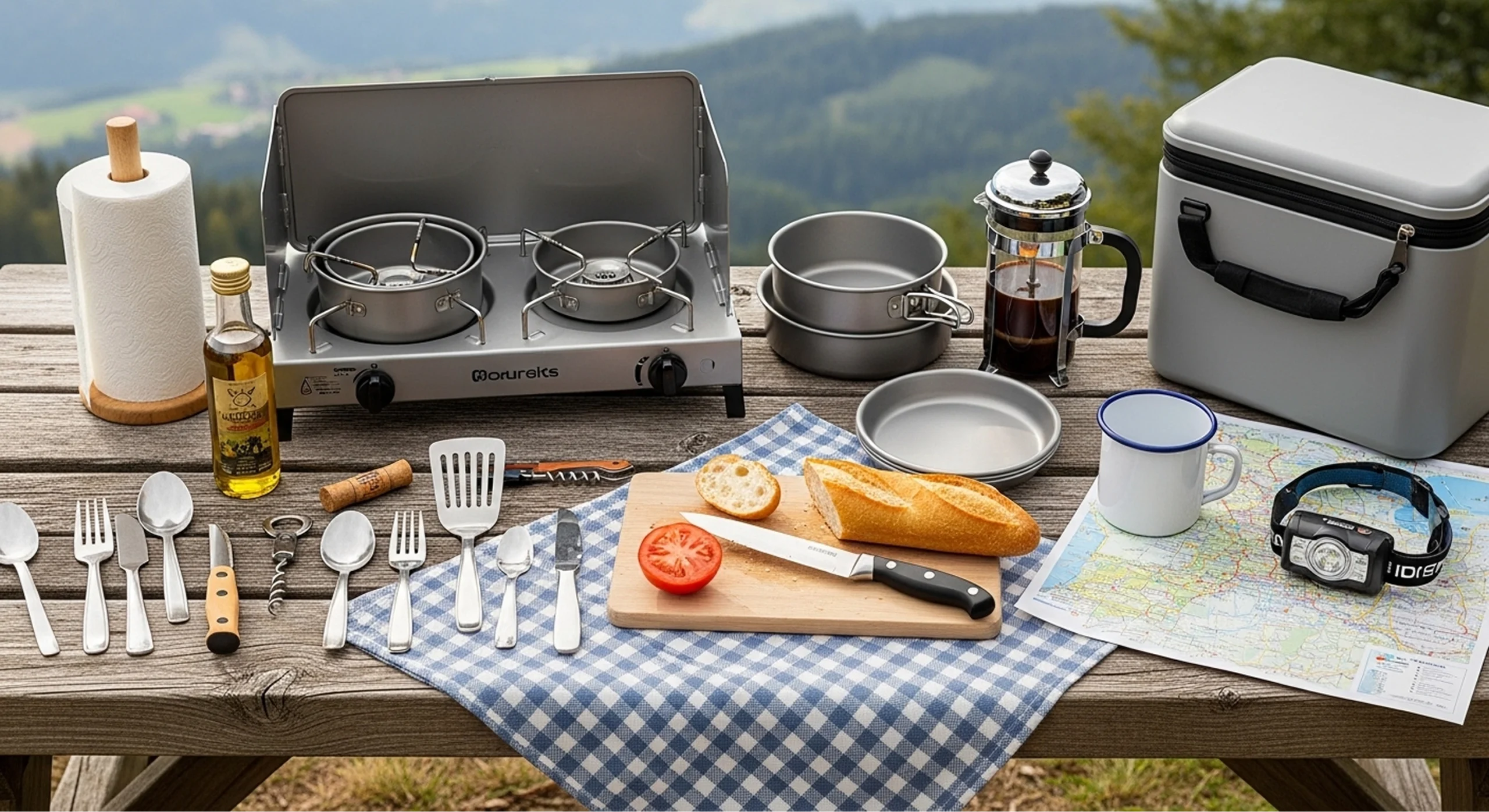
Camp Kitchen Essentials for Easy Outdoor Cooking in Europe
A good camp meal can change the whole mood of a trip. It doesn’t need to be fancy, and it definitely doesn’t need a huge pile of gear. What most campers want is simple cooking that works the same way in a campsite, on a roadside stop, or beside a quiet lake. The challenge in Europe is that your setup has to handle different rules, different shop sizes, different weather, and sometimes very limited space in the car or van.
This guide is a practical breakdown of what you actually need for a solid camp kitchen. It’s written for real camping life in Europe, where convenience matters, packing space matters, and you still want food that feels good after a long day outside.
Start with how you actually camp
Before buying anything, think about your typical trip style. A weekend campsite trip with a table and nearby facilities needs a very different setup than hiking into a remote spot. Car camping and van camping sit in the middle, where you can carry more than a backpacker but still don’t want clutter.
If you mostly camp at campsites, your kitchen can be comfort-focused, with a stable stove, decent cookware, and extra items like a wash basin. If you do road trips, you’ll want a kitchen that packs fast, sets up fast, and works even when it’s windy or raining. If you hike, you’ll focus on the lightest and simplest items that still get the job done.
Once you’re clear on that, it becomes easier to avoid buying gear that looks cool but ends up unused.
Choose the right stove for European camping
Your stove is the heart of your camp kitchen. Most people either go with a compact gas stove, a two-burner stove, or a lightweight backpacking stove. Each has a place, but they don’t all fit every trip.
A compact single-burner stove is the sweet spot for many campers. It’s small, easy to pack, and works well for simple meals like pasta, rice, soup, coffee, and quick breakfasts. A two-burner stove becomes useful when you cook for more people or want to do proper meals with multiple pans, but it takes more space and feels less “grab-and-go.”
Backpacking stoves are excellent for light travel, but they usually feel less stable with larger pots. They’re perfect when weight matters, but if you’re cooking regularly on road trips, a sturdier stove can be more comfortable.
Wind is a big deal in Europe, especially near coasts and open campsites. A stove that struggles in wind can turn a five-minute boil into a frustrating half-hour. If you camp anywhere breezy, prioritise wind protection and stability.
Fuel canisters and compatibility matters more than people think
One of the most annoying problems on a trip is arriving with the wrong fuel. In Europe, fuel availability depends on where you are, and even small differences in canister types can cause confusion. That’s why it’s smart to choose a stove that uses widely available fuel in the regions you travel.
If you road trip across multiple countries, plan ahead and buy fuel before you get too remote. Some areas have great outdoor stores, while others have only small supermarkets. Also, remember that fuel canisters can’t be carried in airplanes, so if you fly and camp, you’ll need to buy fuel after you arrive.
For Outcampers customers, this is one area where “simple and common” beats “special and rare.” The more standard your setup is, the easier it is to keep cooking anywhere in Europe.
Pick cookware that makes cooking easier, not heavier
Cookware is where many people overbuy. You don’t need a full kitchen set to eat well outdoors. Most campers do better with one good pot and one good pan that match how they cook.
A medium pot handles pasta, rice, soup, oatmeal, and boiling water. A pan handles eggs, vegetables, sausages, and quick stir-fry meals. If you only choose one item, a pot is usually more versatile than a pan, especially for beginners. But if you love breakfast cooking, a small pan becomes a favourite fast.
Look for cookware with handles that feel safe and lids that fit properly. Lids matter because they reduce cooking time, save fuel, and make it easier to cook when wind is around. If you camp often, lightweight but durable materials make life easier, especially when you’re packing and unpacking constantly.
Make your cooking tools simple and reliable
You can cook almost anything with a small set of tools. The key is choosing items that don’t break, don’t take space, and don’t make cleaning hard.
A solid spoon or spatula, a small knife, and a compact cutting board are enough for most meals. If you cook often, a pair of tongs can be surprisingly useful. For coffee and tea lovers, a small kettle or a lightweight brewing option adds a lot of comfort to mornings.
Try to avoid packing “nice-to-have” gadgets that only do one job. A kitchen full of single-use tools is what makes packing messy. A few multi-purpose items keep your camp kitchen clean and fast to set up.
Food storage that actually works on the road
Food storage is less glamorous, but it’s one of the most important parts of outdoor cooking. In Europe, you’ll often shop in small local stores or buy fresh ingredients more frequently, which is great, but you still need a way to keep items organised and protected.
A few stackable containers help with leftovers, meal prep, and keeping ingredients safe from crushing. Reusable bags can store snacks, bread, and dry items without taking much space. If you do longer road trips, a cooler bag or portable cooler becomes useful for dairy, meats, and fresh produce.
If you camp in warm weather, food safety matters more than people expect. Even a short drive with the sun hitting your gear can warm food faster than you think. When in doubt, keep perishable items cold, cook what you buy the same day, and store leftovers carefully.
Water and dishwashing without making it a headache
Cooking is only half the job. The other half is cleaning, and if cleaning is annoying, you’ll start skipping meals or eating only snacks. A simple dishwashing setup makes camping feel easier.
A collapsible wash basin, a small biodegradable soap, and a sponge or scrubber are enough. If you camp at organised campsites, you’ll usually find wash stations. If you camp more remotely, bring a water container so you can control your water use and avoid making a mess.
Drying is also important. A small microfibre towel dries fast and packs small. Letting items dry properly prevents smells and keeps your kitchen gear nicer over time.
Build a simple meal plan that suits camping life
The best camp meals are the ones that don’t require constant effort. If you’re hiking, driving, or exploring all day, you want meals that are quick and forgiving.
For breakfast, many campers rely on oats, eggs, simple sandwiches, yoghurt, and fruit. For lunch, wraps and salads are easy, especially if you have a cooler bag. For dinner, one-pot meals work beautifully, like pasta, rice bowls, soups, and simple stews. If you enjoy cooking, a pan meal with vegetables and protein can feel like a proper restaurant comfort meal, just outdoors.
A smart tip is to carry a small “emergency” food stash. Dry pasta, noodles, rice, tinned items, and a few spices can save you when shops are closed or you arrive late somewhere.
The small extras that make a big difference
Some items feel minor until you camp without them. A lighter or reliable ignition method is essential. Windproof matches or a backup lighter can save you in bad weather. A small headlamp makes evening cooking much easier and safer, because you can see what you’re doing without balancing a phone torch.
A compact table or stable surface is also useful for campsite cooking, but it depends on your style of camping. If you usually camp where there are picnic tables, you can skip it. If not, having a stable surface can make cooking feel calmer and cleaner.
A practical camp kitchen checklist for beginners
If you’re building your first camp kitchen for Europe, focus on the essentials and keep it simple. A reliable stove, suitable fuel, one pot, one pan if you want it, a few basic utensils, a knife, a compact cutting board, and a simple wash kit covers the basics. Add a few containers for storage, and consider a cooler bag if you buy fresh items or travel in warm weather.
Once you’ve camped a few times, you’ll naturally learn what you actually use. That’s the best way to expand your kit without wasting money on gear you don’t need.
Final thoughts for Outcampers readers
Outdoor cooking doesn’t have to be complicated to be enjoyable. In fact, the best camp kitchens are usually the simplest ones, because they’re easy to pack, easy to clean, and easy to use anywhere in Europe. When your setup is tidy and reliable, you spend less time managing gear and more time enjoying the trip.