
 Welcome to Outcampers

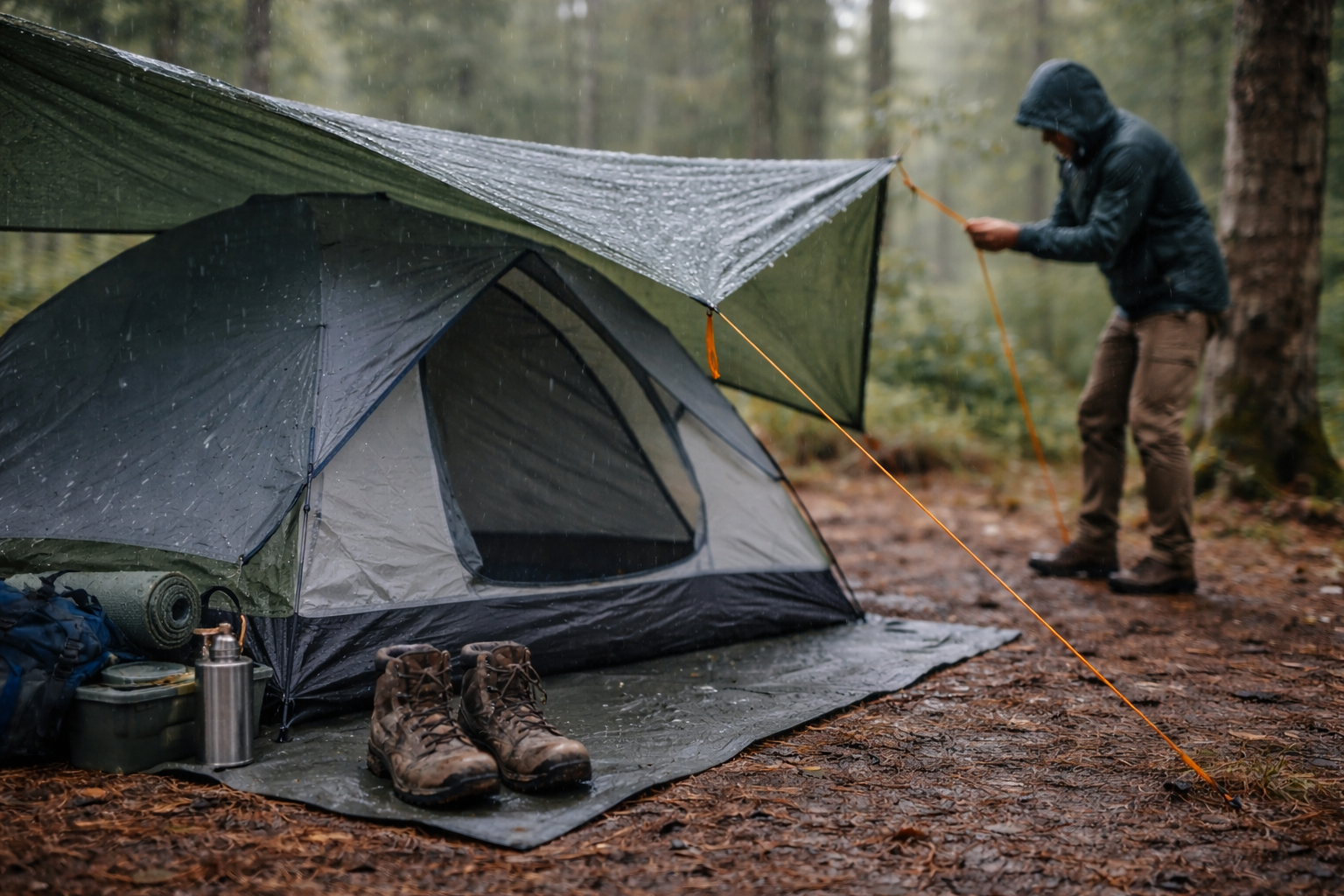
Wet weather camping can be enjoyable (with the right system)
Rain feels miserable when you are unprepared. But with a good shelter setup, smart clothing, and a few habits, wet weather becomes an atmosphere: fresh air, quiet forests, and fewer crowds.
Step 1: Choose the right campsite in wet and windy conditions
Avoid:
- Low dips where water collects
- Dry riverbeds or flood-prone channels
- Exposed ridgelines in strong wind
- Under dead branches
Look for:
- Slightly elevated ground with natural drainage
- A windbreak (trees or a small rise)
- Firm ground that will not turn to deep mud
Step 2: Pitch your shelter properly
Wet weather setup checklist
- Use a footprint or groundsheet (but do not let it stick out)
- Tighten guylines and use extra anchor points if available
- Position the door away from the strongest wind
- Create a “porch” with a tarp for cooking and changing clothes
The tarp porch trick
A tarp gives you a dry place to cook, remove wet clothes, and protect the entry.
Step 3: Clothing that works in rain
The basic system
- Base layer: moisture-wicking
- Mid layer: fleece or light insulation
- Shell: waterproof jacket and (in heavy rain) waterproof trousers
Hands and feet matter most
- Waterproof gloves or a warm glove system
- Extra socks
- Waterproof footwear or gaiters for mud seasons
Step 4: Keep one set of clothes dry
Store your dry set in a waterproof bag. Change into it for sleep.
Step 5: Manage condensation
How to reduce it
- Ventilate: open vents and crack the door slightly
- Keep wet gear in the vestibule or a separate bag
- Avoid cooking inside the tent
- Do not let sleeping bags touch tent walls
Step 6: Drying gear when everything is damp
- Wipe tent walls with a microfiber towel
- Air out sleeping bags during any dry window
- Hang layers under a tarp where air can move
- Pack wet items separately from dry items
Step 7: Mud management
- Use a small ground mat at the entrance
- Take boots off outside or in the vestibule
- Keep a brush or cloth for quick cleaning
- Store muddy items in a dedicated bag or box
Step 8: Cooking in rain
The wet-weather cooking setup
- Use a tarp porch or tailgate shelter
- Choose one-pot meals
- Keep ignition dry (lighter in pocket, backup in dry bag)
Best meal types for rain
- Soups and stews
- Instant noodles with upgrades
- Couscous or quick rice
- Hot drinks
Step 9: Windproofing
- Orient the tent’s narrow end toward wind
- Use guylines properly
- Use natural windbreaks safely
- Wear a windproof shell even if it is not raining
Step 10: Keep morale high
- A hot drink ritual
- Dry socks before bed
- A warm, dry snack
- A clean, organized tent
Common mistakes to avoid
- Packing rain gear where you cannot reach it
- Letting the groundsheet stick out
- Cooking inside the tent
- Using cotton in cold rain
- Not ventilating
- Forgetting spare socks
Closing
A tight shelter, smart layers, a protected cooking space, and dry sleep clothes change everything. Instead of fighting the weather, you adapt – and you still get the best part of camping: being outside.