
 Welcome to Outcampers

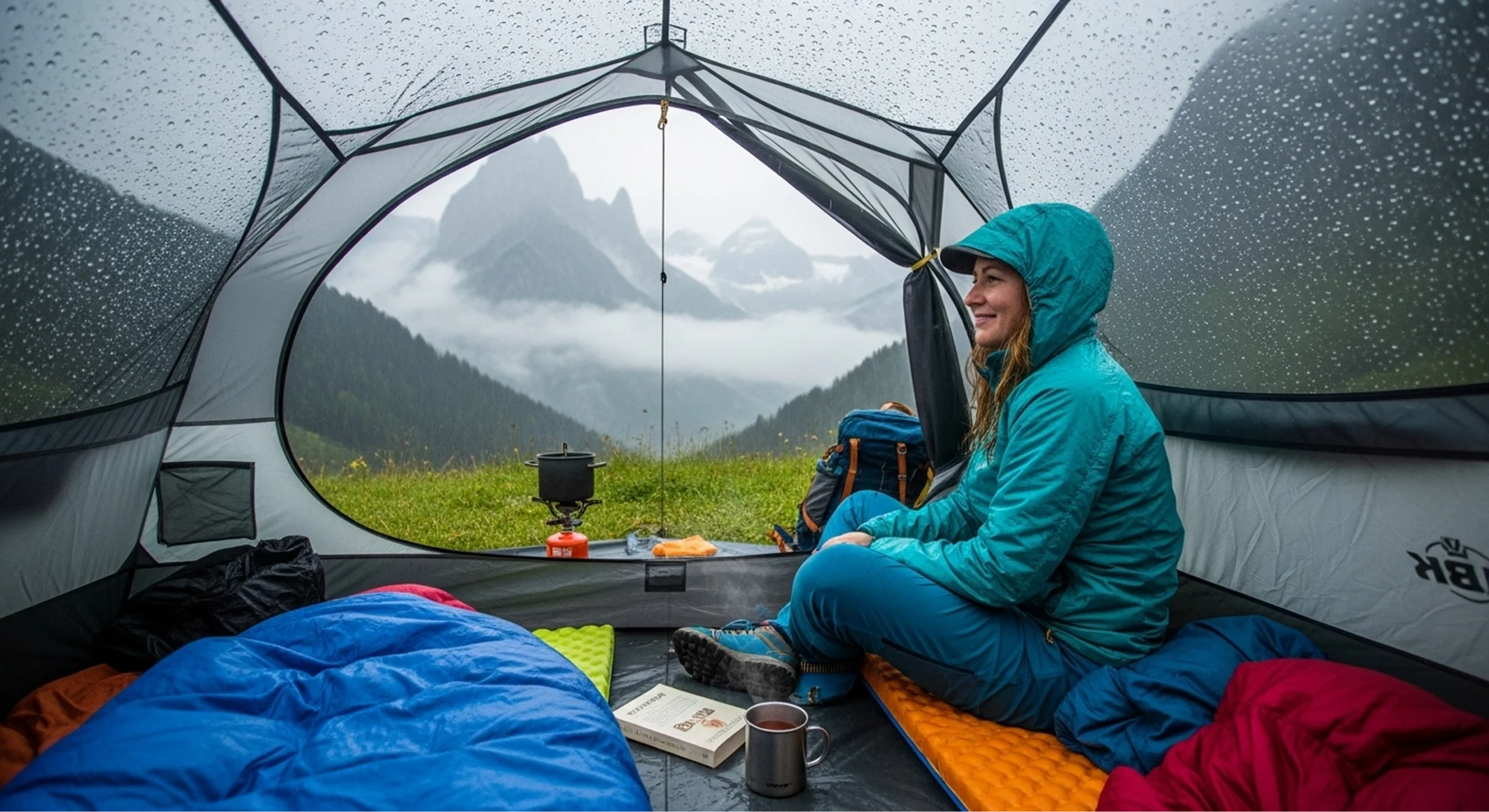
Stay Dry and Comfortable While Camping in European Weather
European weather can be honest one minute and chaotic the next. You can start your day under a bright sky, walk ten minutes, and suddenly you’re dealing with wind, drizzle, and cold air that feels like it came from a different season. That’s part of the adventure, but it’s also why “staying dry” is about more than just owning a rain jacket.
When you’re camping, getting wet affects everything. You feel colder, your sleep quality drops, and even small tasks like cooking or packing become annoying. The good news is you don’t need expensive or complicated gear to stay comfortable. You just need the right approach, and a few smart items that work well together.
This guide shares practical, real-world habits and gear choices that help campers stay dry across Europe, whether you’re on a campsite in France, a road trip through the Alps, or a weekend getaway in the UK.
Think comfort first, not just waterproof
A lot of people buy “waterproof” gear and assume they’re covered. The problem is that waterproof on its own isn’t enough. If a jacket blocks rain but traps sweat, you still end up damp inside. If trousers keep the top half dry but your socks soak through, you’ll feel cold anyway. Comfort comes from managing both rain and moisture from your own body.
The best mindset is to treat your clothing and shelter like a system. Your outer layer blocks rain and wind, your middle layer keeps you warm, and your base layer manages sweat. When these parts work together, you stay dry and comfortable even when the forecast changes fast.
Choose a rain jacket that matches your camping style
A rain jacket for city walking and a rain jacket for camping aren’t always the same. Camping jackets need to handle wind, long wear, and sometimes hours of light rain rather than a quick dash between buildings. You want something that feels dependable, not something that only works in perfect conditions.
Look for a jacket with a proper hood that adjusts well and doesn’t block your vision. A good hood matters more than most people realise because rain often comes with wind, and wind can push water into places you didn’t expect. A slightly longer cut is also helpful because it covers more of your body when you’re sitting, bending, or carrying gear.
Breathability is a big deal for European camping because the air can be humid. If you walk, hike, or even just set up camp while wearing your jacket, you’ll build heat quickly. Jackets with ventilation options, like pit zips or good airflow design, feel much more comfortable when you’re active.
Waterproof trousers are a quiet hero on wet trips
Many campers focus on jackets and forget the legs. But wet trousers and wet socks can ruin a day, especially when temperatures drop in the evening. Waterproof trousers are one of those items you don’t appreciate until you really need them, and then you wonder why you ever camped without them.
If you expect wet weather, choose trousers that are easy to pull on over your normal clothes. The best ones don’t feel like a struggle on a muddy campsite. On long trips, being able to throw them on quickly when rain starts is what keeps you dry and calm.
Even if you don’t wear them all the time, having them packed is a simple way to avoid uncomfortable situations during set-up, packing, or walking around camp.
Your base layer decides whether you feel clammy or fresh
When people say “I stayed dry but I still felt cold,” it often comes down to the base layer. Cotton holds moisture and stays damp, which makes you feel colder and less comfortable. That’s why campers often avoid cotton for sleep and for wet-weather days.
Instead, base layers made for outdoor use help move moisture away from your skin. That means even if you sweat while hiking or working around camp, you don’t stay soaked. It’s a small upgrade that makes a big difference, especially in humid European climates where drying takes longer.
On multi-day trips, a clean, dry base layer for sleeping can feel like a luxury. It’s also one of the easiest ways to keep warmth and comfort consistent.
Mid layers keep you warm when the air turns cold
Rain often brings cooler air, and wind makes it feel colder. A good mid layer keeps your body heat stable. Fleece is a popular option because it stays warm and dries quickly. Lightweight insulated layers are also helpful if you camp in shoulder seasons or at higher altitude.
The key is to avoid bulky layers that make you sweat. The goal is steady warmth, not overheating. If you’re moving, wear less. If you’re sitting around camp in the evening, add more. That simple adjustment prevents the “sweat then freeze” cycle that makes wet trips feel miserable.
Shelter setup matters as much as clothing
Even the best clothes won’t save you if your shelter setup lets water in, or if your tent is placed in the wrong spot. A few minutes of smart planning can prevent hours of frustration later.
Choose a campsite location that’s slightly higher than the surrounding area so water doesn’t pool underneath you. Avoid the lowest point of a field, even if it looks flat and convenient. Try not to camp directly under trees if the weather is bad, because dripping water can continue long after rain stops and branches can move in strong wind.
When pitching a tent in wet weather, the most important thing is keeping the inside dry while you work. If possible, set up the rainfly first, or at least keep your inner tent protected while you get everything in place. Once the inner tent is wet, it’s much harder to dry during the trip.
Keep your gear dry inside your bag or van
One of the simplest ways to feel comfortable while camping is having at least one set of gear that stays completely dry. That includes dry clothes for sleeping, dry socks, and anything you rely on for warmth. The easiest way to achieve this is to separate items into dry bags or waterproof compartments.
Even if you don’t use full dry bags, you can use simple waterproof packing methods like separating sleep clothes, electronics, and food. If your tent is damp in the morning, the worst feeling is discovering your sleeping clothes are damp too. A small organisation habit prevents that.
For van and car campers, it’s also worth avoiding leaving wet gear in sealed spaces without airflow. Damp gear creates odours and stays wet longer. If possible, air things out whenever you stop, even for a short break.
Wet shoes and socks are the fastest way to feel miserable
Feet are where comfort can fall apart quickly. If your shoes soak through and your socks stay wet, your body feels colder overall. Waterproof hiking shoes or boots help, but they aren’t magic. If water comes in from the top or you step in deep puddles, you still get wet.
A simple improvement is bringing extra socks and rotating them. Keep one pair reserved for sleeping so you always have something dry and warm at night. If you’re camping in rainy conditions, quick-drying socks and moisture-managing fabrics help a lot. Gaiters can also be helpful in muddy areas because they reduce the amount of water and dirt that gets into your footwear.
If your shoes do get wet, don’t ignore it. Drying them is harder in European humidity, so it’s better to manage wetness early instead of hoping it’ll “fix itself.”
Condensation is not rain, but it still makes things wet
Even when it doesn’t rain, tents can feel damp in the morning because of condensation. Your breath and body heat create moisture inside, and if airflow is limited, it settles on the walls. This is very common in Europe, especially near lakes, forests, and coastal areas.
Good ventilation helps. Keeping vents open, avoiding placing wet clothes inside the sleeping area, and using a tent with decent airflow design makes mornings much more comfortable. It also helps to wipe down tent walls with a small cloth if you wake up to moisture. It’s a small task that prevents that damp feeling spreading to your sleeping gear.
Understanding condensation is important because many campers think their tent is leaking when it’s actually moisture from inside. Once you know the difference, it becomes easier to manage.
A practical dry camping routine that works anywhere
If you want one simple routine that works well in unpredictable weather, focus on protecting your sleep system and keeping one set of clothes dry. That means packing sleep layers separately, making sure your sleeping bag and pad stay protected, and avoiding bringing wet clothing into your sleeping area.
During the day, manage moisture by adjusting layers so you don’t sweat too much. In the evening, change into dry clothes early so your body stays warm. These small habits are what make wet camping feel manageable rather than exhausting.
Final thoughts for Outcampers readers
Camping in Europe doesn’t require perfect weather, but it does reward good preparation. When you stay dry, you stay warm. When you stay warm, you sleep better. And when you sleep better, the whole trip feels easier and more enjoyable.